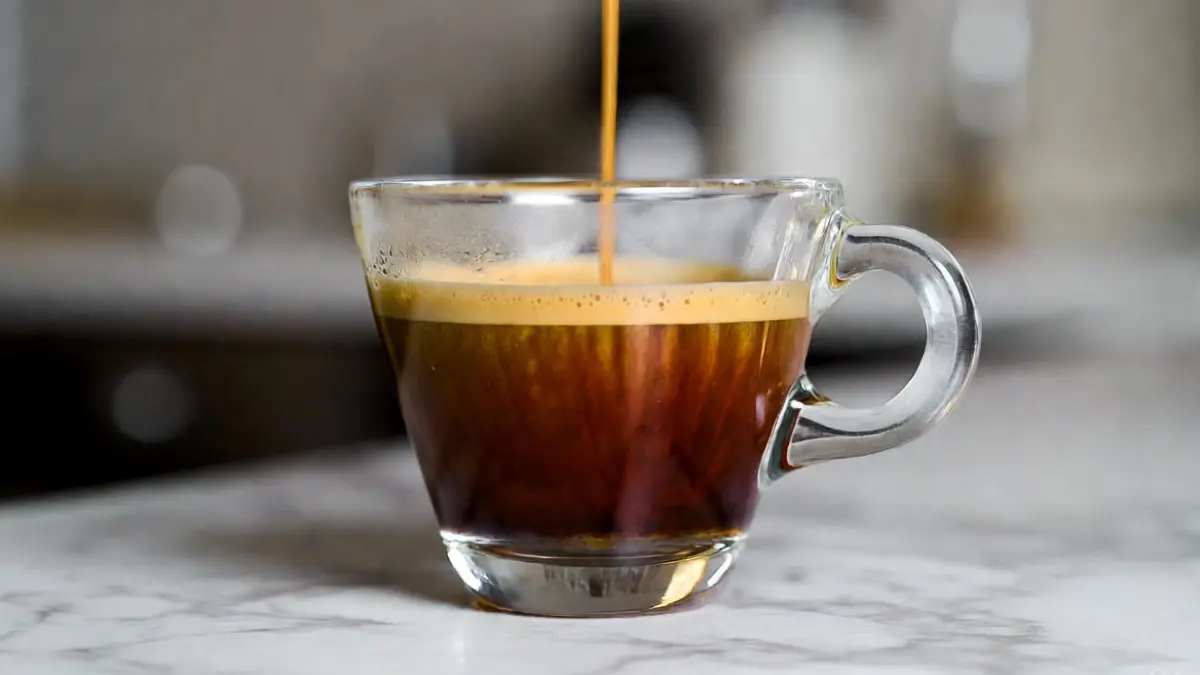
For the serious specialty coffee enthusiast, the pursuit of the perfect espresso shot is a lifelong journey, a delicate dance between art and applied science. It is a quest that moves beyond the simple act of pressing a button and delves into the complex physics and chemistry of extraction. At Zaidly, we believe that true mastery of the home espresso machine comes not from intuition alone, but from a deep, almost obsessive understanding of the variables at play.
This is not a guide for beginners. This is an editorial deep dive into the thermodynamics, fluid dynamics, and solubility kinetics that govern the 25-second miracle we call espresso. We are here to move you from a casual home brewer to a meticulous scientist, capable of diagnosing and correcting every flaw in your shot with precision.
The Espresso Trinity: Dose, Grind, and Tamp
Before the water even touches the coffee, the fate of your shot is largely determined by the preparation of the coffee bed, or “puck.” This stage is governed by three critical, interdependent variables: the dose, the grind size, and the tamping pressure.
1. The Dose: Mass and Density
The dose—the mass of dry coffee grounds used—is the foundation of your recipe. While the Specialty Coffee Association (SCA) suggests a range for single and double shots, the most important factor is the headspace left in your portafilter basket. Too much coffee, and the puck swells to touch the shower screen, leading to an uneven, messy extraction. Too little, and the water may bypass the coffee entirely.
The key is consistency. Weighing your dose to the tenth of a gram (e.g., 18.0g) is non-negotiable. This ensures a consistent porosity and permeability in the coffee bed, which are essential for controlling the flow rate.
2. The Grind: Surface Area and Resistance
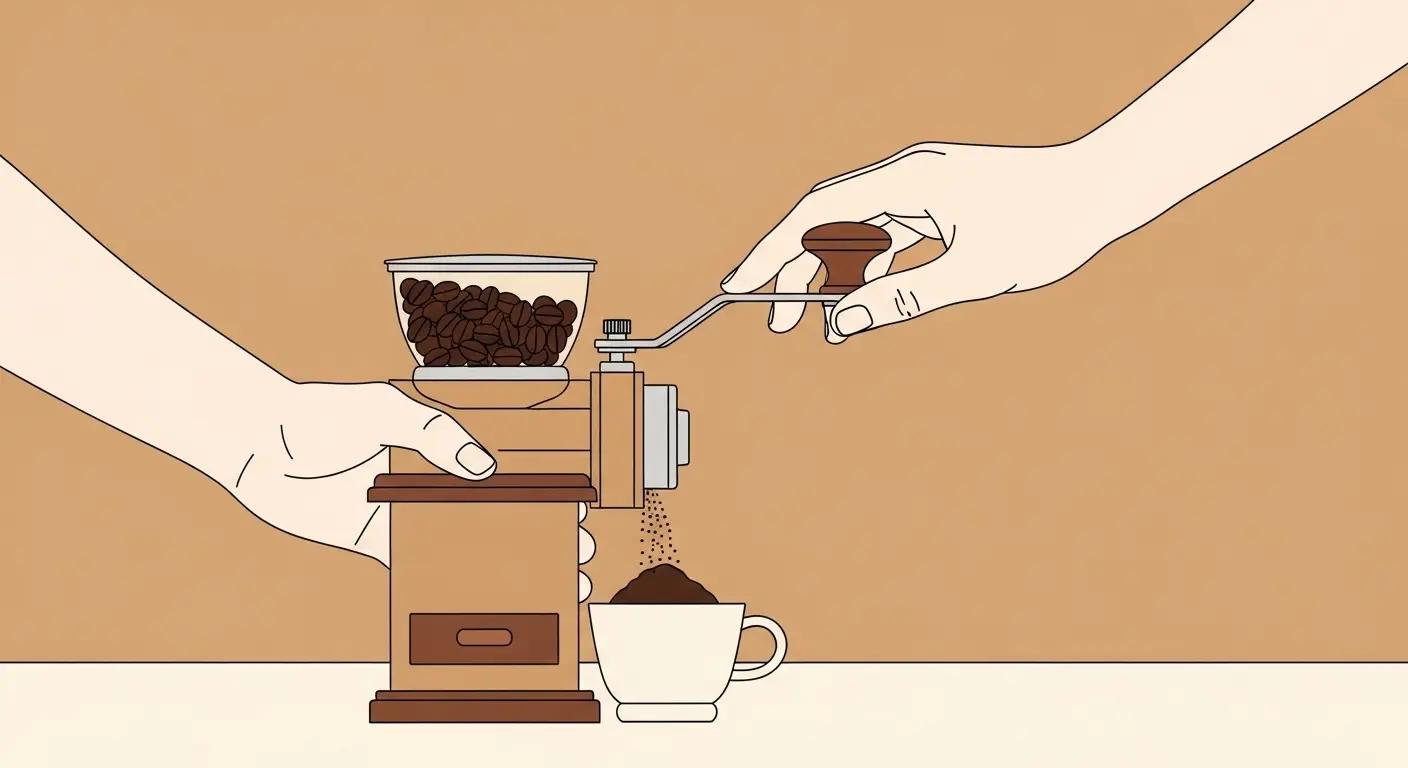
The grind size is arguably the most critical variable, as it dictates the total surface area available for extraction and the resistance the water encounters. Espresso requires a grind fine enough to create significant resistance, forcing the water to spend enough time (contact time) with the coffee to dissolve the desirable compounds.
- Too Coarse: Low resistance, fast flow, under-extracted, sour, and weak shot.
- Too Fine: High resistance, slow flow, over-extracted, bitter, and choked shot.
The presence of fines—microscopic particles created during grinding—is a major factor in flow dynamics. Fines migrate during tamping and extraction, clogging the pores of the coffee bed and dramatically increasing resistance, a phenomenon that often leads to channeling. Understanding the role of fines is crucial for advanced puck preparation techniques. To explore more of our expert guides on this topic, you can visit the Zaidly homepage: https://zaidly.com.
3. The Tamp: Leveling the Playing Field
Tamping is not about brute force; it is about leveling and consolidation. The goal is to remove air pockets and create a perfectly flat, uniform surface perpendicular to the flow of water. An uneven tamp is a guaranteed recipe for channeling, where water finds the path of least resistance and rushes through a weak point in the puck, resulting in severe under-extraction in that area and a poor-tasting shot overall.
The Four Pillars of Extraction: A Scientific Framework
Once the puck is prepared, the extraction process itself is governed by four primary physical parameters: pressure, temperature, time, and ratio. Mastering these is the core of the science.
1. Brew Ratio (The Recipe)
The brew ratio is the relationship between the mass of dry coffee grounds (in) and the mass of liquid espresso (out). It is expressed as a ratio (e.g., 1:2).
| Ratio | Description | Flavor Profile |
|---|---|---|
| Ristretto (1:1 to 1:1.5) | Short, concentrated, high viscosity. | Intense, heavy body, lower overall extraction yield. |
| Normale (1:2 to 1:2.5) | Standard, balanced. | Sweet, balanced acidity and bitterness, the industry standard. |
| Lungo (1:3 to 1:4) | Long, higher volume. | Lighter body, higher extraction yield, more potential for bitterness. |
A 1:2 ratio (e.g., 18g in, 36g out) is the scientific starting point for a balanced shot, as it targets the optimal extraction yield—the percentage of dissolved solids—that the SCA defines as ideal 1.
2. Pressure (The Driving Force)
The standard pressure for espresso extraction is 9 bars. This pressure is necessary to overcome the resistance of the finely ground, tightly packed coffee bed. However, modern machines and techniques, such as flow profiling and pressure profiling, have shown that a static 9-bar pressure is not always optimal. Many top baristas now use lower pressures (6-8 bars) or ramp the pressure up and down during the shot to mitigate channeling and maximize flavor clarity.
3. Temperature (The Solvent Power)
Water temperature is a critical factor in solubility. Hotter water dissolves compounds faster. The ideal range is typically between 90°C and 96°C (195°F to 205°F).
- Lighter Roasts: Require higher temperatures (93°C-96°C) to fully extract the complex, dense cellular structure of the bean.
- Darker Roasts: Require lower temperatures (90°C-92°C) to prevent over-extraction and excessive bitterness, as the cell structure is more brittle and soluble.
Precise temperature control, often achieved through PID controllers on high-end machines, is essential for consistency.
4. Time (The Contact Duration)
The standard extraction time for a normale shot is typically 25 to 30 seconds, measured from the moment the pump is engaged until the target output mass is reached. Time is the result of the interaction between grind size, dose, and pressure. If your shot runs too fast or too slow, you must adjust the grind size, not the time itself. Time is the diagnostic tool, not the control variable.
Diagnosing the Flaw: Channeling and the WDT
The most common enemy of the home barista is channeling. This occurs when water exploits a weakness in the puck—a crack, a void, or an area of low density—and rushes through it, leaving the rest of the coffee bed under-extracted. The result is a thin, uneven, and often sour shot.
Visually, channeling can be spotted by a “gushing” or “spraying” from the bottom of the portafilter, or by a non-uniform color change in the stream.
The solution lies in meticulous puck preparation, specifically the Weiss Distribution Technique (WDT). The WDT involves stirring the grounds in the portafilter with a fine needle to break up clumps and evenly distribute the fines before tamping. This simple, low-tech step is scientifically proven to create a more homogeneous density profile, drastically reducing the likelihood of channeling.

The Scientific Dial-In Methodology
To master your machine, you must adopt a scientific, single-variable methodology. Never change more than one variable between shots.
-
Establish a Baseline: Start with a standard 1:2 ratio (e.g., 18g in, 36g out) and a target time of 28 seconds. Use a consistent water temperature (e.g., 93°C).
-
Adjust Grind for Time: If your shot runs in 18 seconds, your grind is too coarse. If it runs in 40 seconds, it is too fine. Make a small, incremental adjustment to the grinder and pull the next shot. Repeat until you hit the 25-30 second window.
-
Adjust Ratio for Taste: Once the time is correct, use the brew ratio to fine-tune the flavor.
- If the shot is too intense or bitter, try a longer ratio (e.g., 1:2.5) to increase the extraction yield and dilute the concentration.
- If the shot is too sour or weak, try a shorter ratio (e.g., 1:1.8) to increase concentration and body.
-
Adjust Temperature for Clarity: Finally, use temperature to highlight specific flavor notes. Higher temperatures can bring out more sweetness and complexity in light roasts, while lower temperatures can mute harshness in dark roasts.
This systematic approach removes guesswork and allows you to isolate the cause of any flavor defect. For a deeper understanding of the compounds you are extracting, the Specialty Coffee Association (SCA) provides extensive research on brewing fundamentals and parameters, which we highly recommend reviewing 2.
The Final Frontier: Connecting Science to the Cup
The ultimate goal of all this scientific rigor is, of course, a transcendent sensory experience. The final step in mastering the perfect shot is the ability to accurately describe and diagnose the flavors in your cup.
The World Coffee Research (WCR) has developed a comprehensive Sensory Lexicon—a standardized vocabulary for describing coffee flavor, aroma, and texture—that allows baristas and scientists to communicate precisely about the coffee they taste 3. By training your palate to identify terms like phenolic, malty, brown sugar, or astringent, you can translate the sensory experience back into the scientific variables that created it.
For example, if you taste excessive sourness (citric acid), you know you have under-extracted, and your next step is to grind finer or increase the brew temperature. If you taste excessive bitterness (chlorogenic acids), you know you have over-extracted, and you must grind coarser or decrease the brew ratio.
The perfect shot is not a fixed point; it is a moving target defined by the unique characteristics of the bean and your personal preference. By embracing the science—by measuring, controlling, and systematically adjusting the variables of dose, grind, pressure, temperature, time, and ratio—you gain the power to consistently reproduce excellence. The machine is merely a tool; the true master is the scientist behind the portafilter.
References
Footnotes
-
SCA Suggested Brew Parameters - Perfect Daily Grind, referencing the Specialty Coffee Association’s guidelines for espresso volume and dose. ↩
-
Brewing Fundamentals Research - The Coffee Science Foundation, the research arm of the Specialty Coffee Association (SCA), providing insights into the science of coffee brewing. ↩
-
World Coffee Research Sensory Lexicon - A tool for understanding and measuring coffee’s flavors and aromas, developed by World Coffee Research. ↩