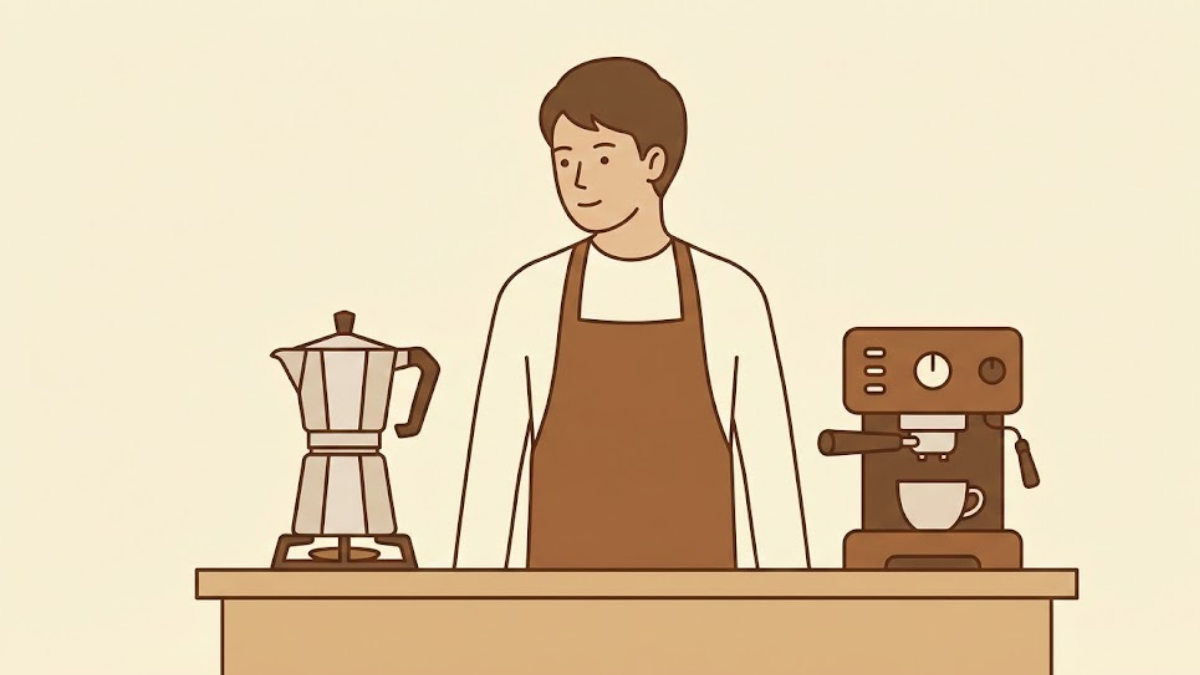
If you're trying to choose between a moka pot and an espresso machine, you're probably weighing cost against convenience, flavor against flexibility, and countertop space against coffee quality.
Both methods brew concentrated coffee, but they work differently, produce different results, and suit different types of coffee drinkers.
A moka pot is a stovetop brewer that uses steam pressure to push water through ground coffee, producing a strong, espresso-like brew at a fraction of the cost.
An espresso machine uses high-pressure pumps to force hot water through finely ground coffee, creating authentic espresso with crema.
Understanding how each method works, what they taste like, and what they demand from you will help you choose the right one for your routine, budget, and expectations.
Quick Comparison
A moka pot costs between $20 and $60, requires no electricity, and brews coffee in about five minutes using your stovetop.
An espresso machine ranges from $100 for entry-level manual models to over $3,000 for semi-automatic or automatic machines, requires counter space and power, and demands more skill and maintenance.
The moka pot produces a strong, full-bodied brew that resembles espresso but lacks true crema and the layered complexity of pressure-extracted espresso.
An espresso machine creates authentic espresso with crema, better clarity, and more control over variables like temperature and extraction time.
| Feature | Moka Pot | Espresso Machine |
|---|---|---|
| Price Range | $20–$60 | $100–$3,000+ |
| Brew Time | 4–6 minutes | 25–40 seconds per shot |
| Pressure | ~1.5 bar (steam) | 9 bar (pump) |
| Crema | Minimal to none | Yes, with proper technique |
| Portability | Highly portable | Stationary, requires power |
| Ease of Use | Simple, forgiving | Requires skill and practice |
| Maintenance | Rinse after use | Daily cleaning, descaling, backflushing |
Things You'll Need
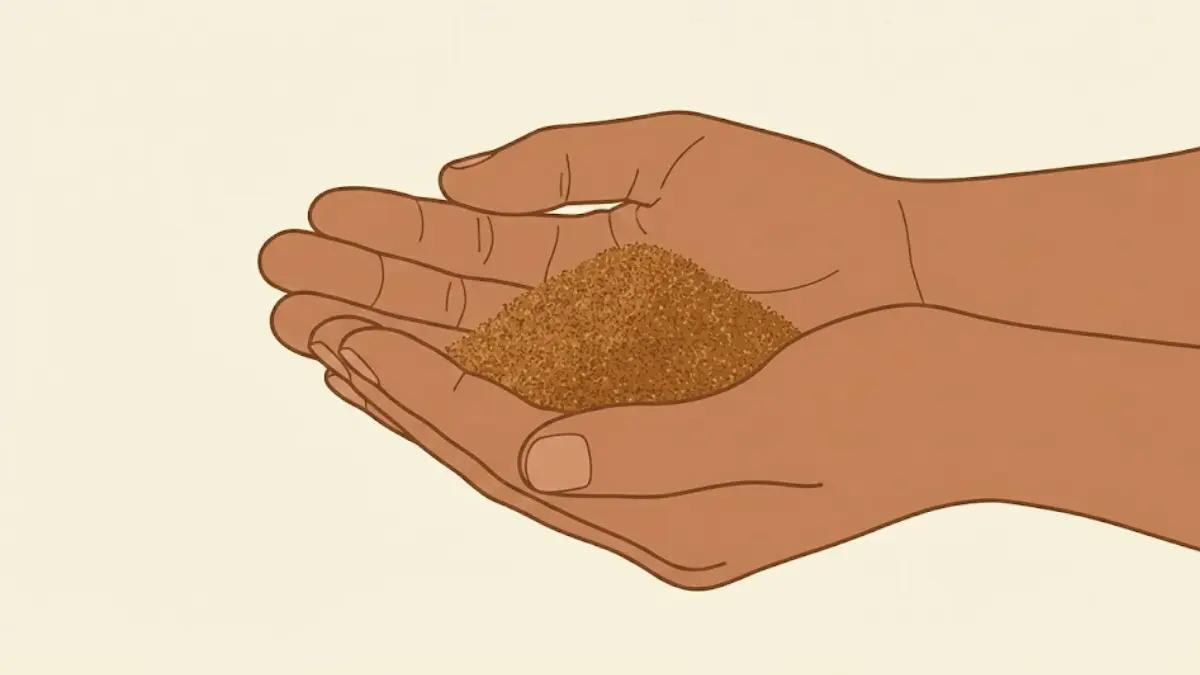
For a moka pot, you need the pot itself, a heat source (gas or electric stovetop), medium-fine ground coffee, and filtered water.
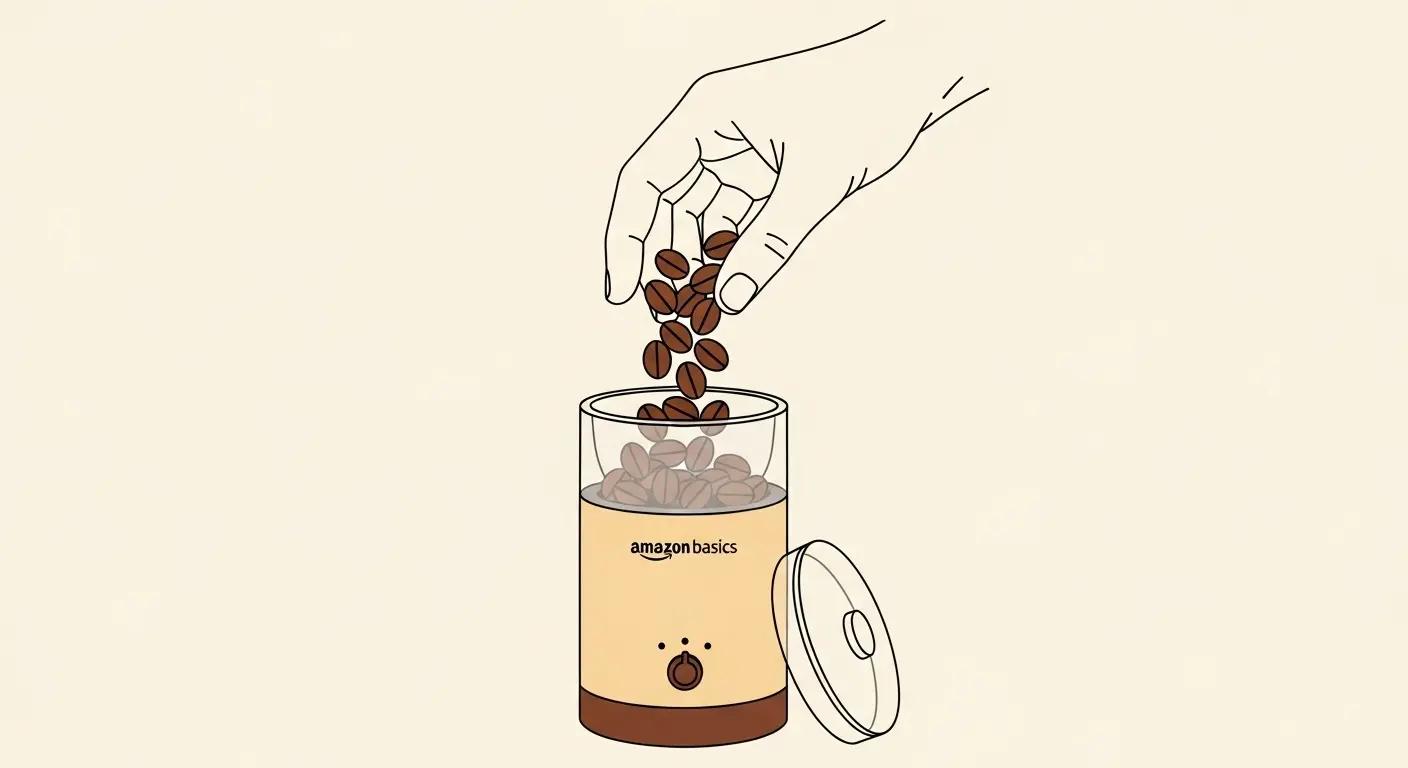
You don't need a grinder if you buy pre-ground coffee, but fresher beans ground at home improve flavor.
The pot comes in sizes measured by espresso cup servings—most home users choose a 3-cup or 6-cup model.
For an espresso machine, the requirements depend on the type. Manual lever machines need only ground coffee and water but demand physical effort and skill.
Semi-automatic machines require a grinder (ideally a burr grinder with stepless adjustment), a tamper, filtered water, and practice dialing in grind size, dose, and tamp pressure.
Automatic and super-automatic machines simplify the process but cost significantly more.
You'll also need cleaning supplies: backflushing detergent, descaling solution, and a group head brush.
The grinder is often more important than the machine itself. Espresso requires precise, consistent particle size, which blade grinders and low-end burr grinders can't deliver.
Expect to spend at least $100 on a grinder if you're serious about espresso quality.
The 5 Best Manual Coffee Grinders for Travel in 2025: Grind Anywhere, Brew Better
Step-by-Step Comparison: How Each Method Works
Part 1: Understand How a Moka Pot Brews Coffee
A moka pot has three chambers: a bottom chamber for water, a middle funnel basket for ground coffee, and a top chamber where brewed coffee collects.
You fill the bottom chamber with water just below the pressure valve, add coffee to the basket without tamping, and screw the top and bottom together.
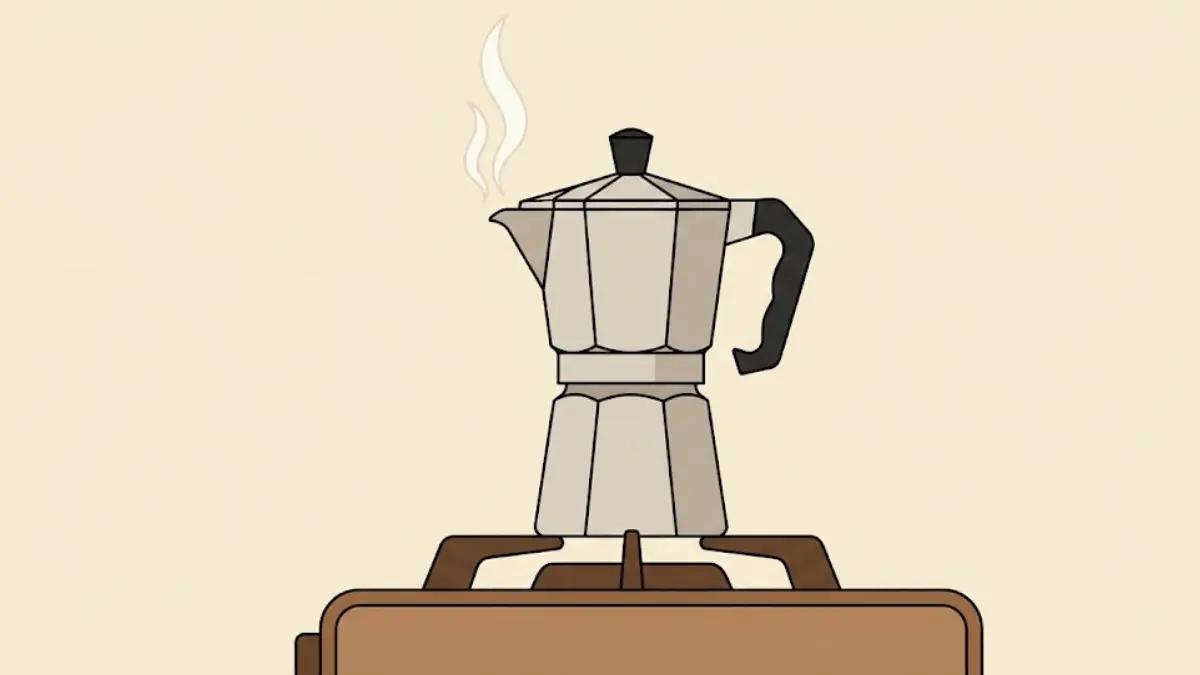
Place the pot on medium heat. As the water heats, steam pressure builds and pushes water up through the coffee grounds and into the top chamber.
You'll hear a hissing or gurgling sound when brewing is nearly complete.
The key difference from espresso is pressure. Moka pots generate roughly 1 to 1.5 bar of pressure, far below the 9 bar used in espresso machines.
This lower pressure extracts coffee differently—resulting in a fuller body and more pronounced bitterness, but less aromatic complexity and no stable crema.
The brew is strong and concentrated, closer to a double-strength drip coffee than true espresso.
Common mistakes include using too much heat (which causes bitter, metallic flavors), tamping the grounds (which can block the filter and create dangerous pressure), and leaving brewed coffee on the heat too long (which burns it).
Remove the pot from heat as soon as you hear sputtering, and run the base under cold water to stop extraction if needed.
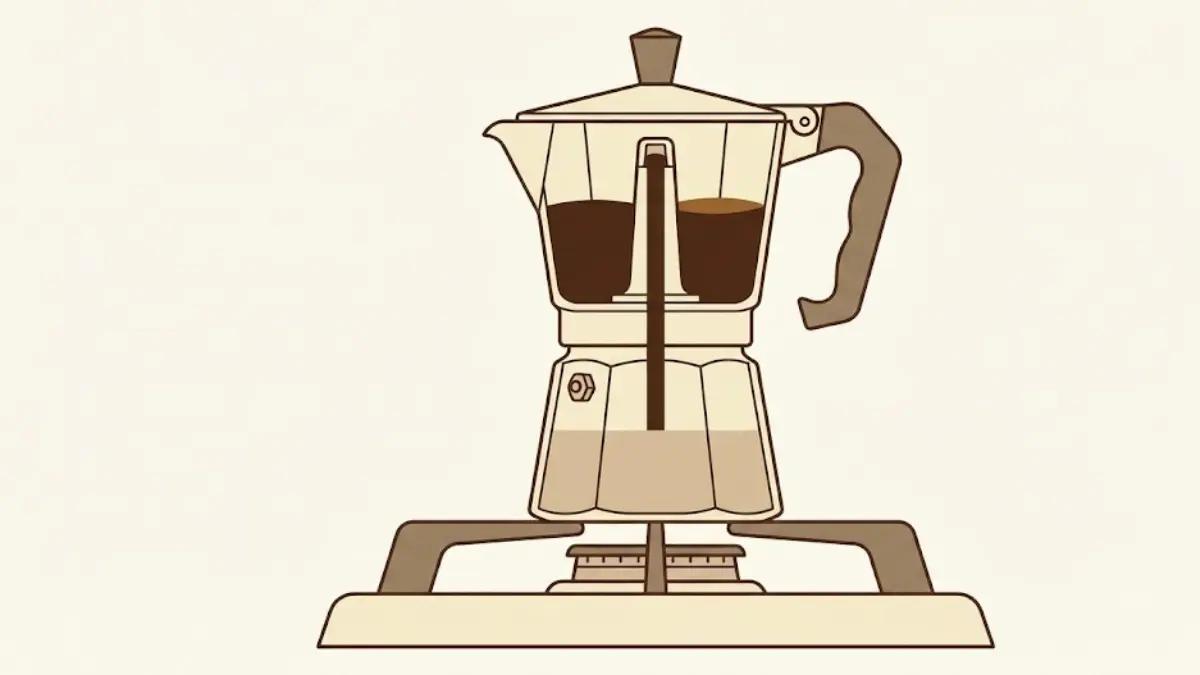
Cross-section diagram of moka pot brewing process showing water, coffee grounds, and brewed coffee chambers
Part 2: Understand How an Espresso Machine Extracts Coffee
An espresso machine heats water to around 195–205°F and forces it through finely ground, tamped coffee at 9 bar of pressure.
This high-pressure extraction takes 25 to 30 seconds and produces a concentrated shot with a layer of crema—a golden-brown foam created by emulsified oils and CO₂ released during extraction.
Crema is a sign of fresh beans and proper technique, though it doesn't necessarily indicate superior flavor.
Semi-automatic machines give you full control: you dose the coffee (usually 18–20 grams for a double shot), distribute it evenly in the portafilter, tamp with consistent pressure, lock the portafilter into the group head, and start the pump.
You stop the shot manually when the desired volume is reached. Variables like grind size, dose, tamp pressure, water temperature, and extraction time all affect flavor.
Dialing in a new coffee—finding the right grind setting and dose—takes trial and error.
Manual lever machines replace the pump with a spring-loaded lever you pull by hand.
This gives even more control over pressure and flow rate but requires strength and timing.
Automatic machines handle dosing, tamping, and timing for you, while super-automatic machines grind, brew, and clean with the press of a button.
Convenience increases with automation, but so does cost, and you lose the ability to fine-tune each shot.
Espresso machines require warmup time—anywhere from 5 to 30 minutes depending on boiler size and type.
This is a major practical difference from the moka pot, which is ready as soon as you turn on the stove.
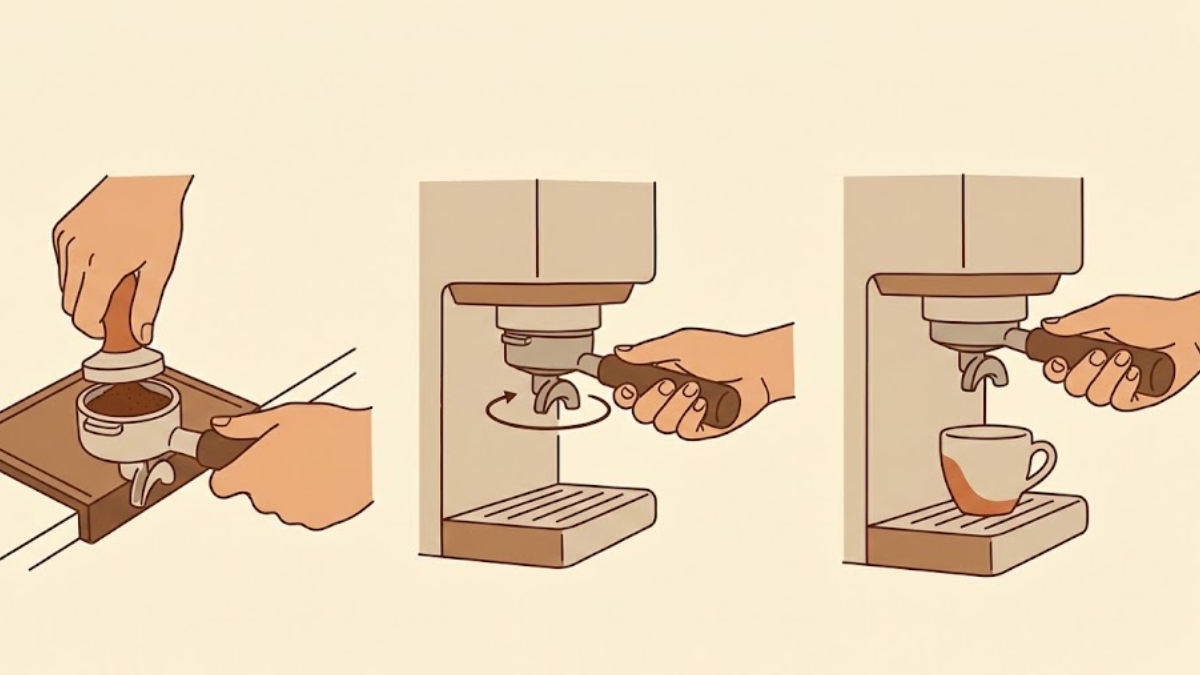
Hands tamping espresso grounds in portafilter and locking into espresso machine group head
Part 3: Compare Taste and Coffee Quality
Moka pot coffee tastes bold, heavy, and somewhat harsh. It emphasizes body over brightness, with muted acidity and a tendency toward bitterness.
The lower brewing temperature and longer contact time extract more bitter compounds and fewer delicate aromatics.
You get a strong cup, but not the layered sweetness, fruitiness, or floral notes that espresso can reveal.
Moka pot coffee works well in milk drinks—it cuts through steamed milk in lattes or cappuccinos—but it's less enjoyable straight for most people.
Espresso, when brewed correctly, balances sweetness, acidity, and bitterness. The high pressure and short extraction time preserve volatile aromatics and create a syrupy texture.
You can taste distinct flavor notes—chocolate, caramel, citrus, berries—depending on the beans.
Espresso also forms the base for milk drinks, but it shines on its own in ways moka pot coffee doesn't.
That said, bad espresso tastes worse than bad moka pot coffee. If your grind is too coarse, the shot runs fast and tastes sour and weak.
If it's too fine, the shot chokes and tastes bitter and astringent. Dialing in espresso requires patience, waste, and a willingness to throw out failed shots.
The moka pot is more forgiving—you can use pre-ground coffee, and while technique matters, small errors don't ruin the brew.

Side-by-side comparison of moka pot coffee and espresso shot with crema in cups
Part 4: Evaluate Cost, Maintenance, and Long-Term Commitment
A Bialetti moka pot costs around $30 and lasts decades with basic care. You rinse it after each use, occasionally replace the gasket and filter screen, and avoid putting it in the dishwasher.
There are no pumps, boilers, or electronic components to break. The only recurring cost is coffee.
Espresso machines are a different story. Entry-level manual machines like the Flair or Cafelat Robot cost $150 to $300 and have minimal maintenance, but they still require a quality grinder, which adds another $100 to $400.
Semi-automatic machines from brands like Gaggia or Breville start around $400 and go up past $2,000.
You'll spend time and money on cleaning: backflushing the group head weekly, descaling every few months, replacing gaskets and shower screens as needed, and troubleshooting when something goes wrong.
If you add up the grinder, the machine, the accessories, and the learning curve, espresso becomes a hobby as much as a brewing method.
For some people, that's appealing. For others, it's overkill. A moka pot gives you strong coffee without the investment or complexity.
The trade-off is flexibility. An espresso machine lets you dial in single-origin beans, experiment with different roast levels, pull ristretto or lungo shots, and steam milk for latte art.
A moka pot gives you one style of coffee, brewed one way. If you want variety and control, the espresso machine justifies the cost. If you want simplicity and consistency, the moka pot wins.
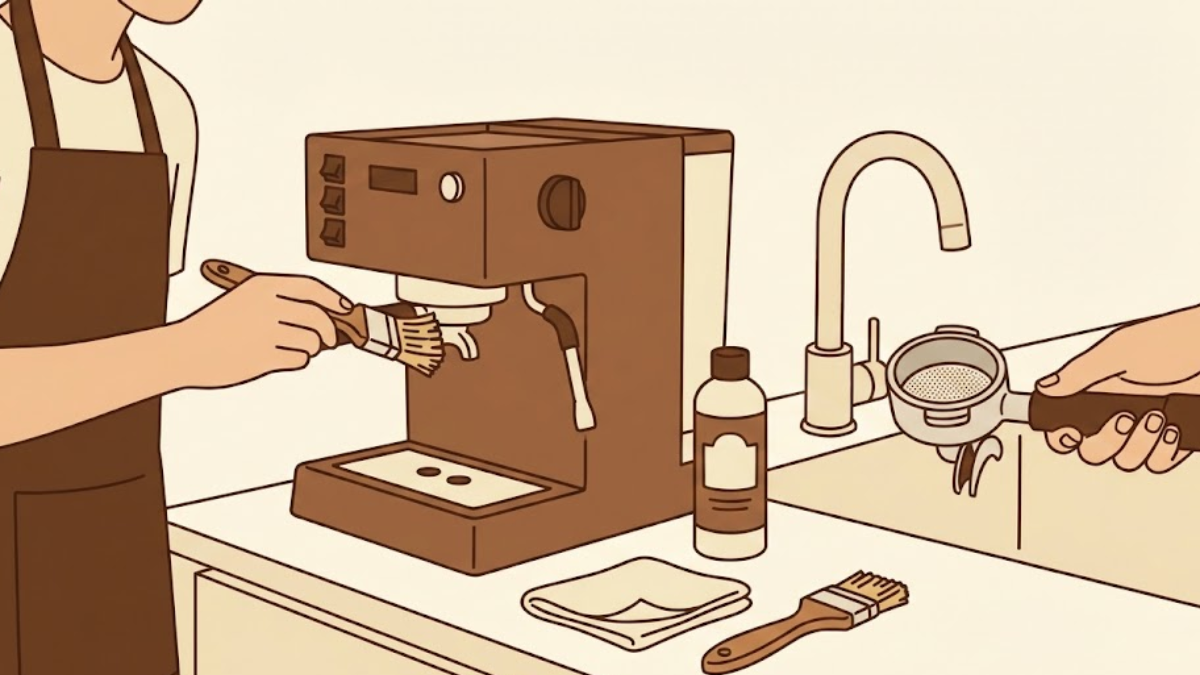
Person cleaning espresso machine group head with brush and performing maintenance routine
Pros & Cons
Moka Pot Pros:
- Inexpensive and durable
- No electricity required, highly portable
- Simple to use with minimal learning curve
- Brews strong coffee suitable for milk drinks
- Low maintenance and easy to clean
Moka Pot Cons:
- Cannot produce true espresso or crema
- Less control over brewing variables
- Prone to bitterness if heat is too high
- Limited to one brew strength and style
- Requires stovetop, not ideal for offices or dorms
Espresso Machine Pros:
- Produces authentic espresso with crema
- Full control over extraction variables
- Reveals complex flavors in quality beans
- Can brew a variety of espresso-based drinks
- Impresses guests and supports a coffee hobby
Espresso Machine Cons:
- High upfront cost, especially with grinder
- Requires skill, practice, and patience
- Demands regular cleaning and maintenance
- Takes up counter space and requires power
- Frustrating learning curve with wasted coffee
Buying Guide
Choose a moka pot if:
- You want strong coffee for milk drinks without spending much
- You value simplicity and don't want to learn espresso technique
- You have limited counter space or no electrical outlet
- You travel or camp and want portable brewing
- You're okay with a consistent but less nuanced cup
Choose an espresso machine if:
- You want true espresso and enjoy the process of dialing in shots
- You're willing to invest in a grinder and learn proper technique
- You drink multiple espresso-based drinks daily
- You care about flavor clarity and extracting the best from specialty beans
- You have the budget, space, and patience for a more involved setup
Avoid common mistakes:
- Don't buy a cheap espresso machine (under $100) expecting real espresso. Pressurized portafilters and steam-driven machines don't deliver the same results as pump-driven models.
- Don't assume pre-ground coffee works for espresso machines. It goes stale quickly and lacks the consistency needed for proper extraction.
- Don't skip the grinder. A $500 espresso machine with a $30 blade grinder produces worse coffee than a moka pot.
- Don't expect a moka pot to taste like espresso. It's a different brew method with different characteristics. If you want espresso, buy an espresso machine or visit a café.
For most people on a budget who want strong coffee at home, a moka pot is the smarter choice.
For coffee enthusiasts willing to invest time and money into learning a craft, an espresso machine offers deeper rewards. There's no wrong answer—just different priorities.
Primula Classic Stovetop Espresso and Coffee Maker
Keurig K-Classic Single Serve K-Cup Pod Coffee Maker
FAQs
Can a moka pot make real espresso?
No. A moka pot produces strong coffee that resembles espresso in strength and concentration, but it doesn't generate the 9 bar of pressure needed to create true espresso.
The flavor is heavier and more bitter, and you won't get stable crema. If you want real espresso, you need an espresso machine.
Do I need an expensive grinder for a moka pot?
Not necessarily. Moka pots are more forgiving than espresso machines, and you can use pre-ground coffee or a basic burr grinder.
However, fresher beans and a consistent medium-fine grind improve flavor. You don't need the precision required for espresso.
How long does it take to learn to pull good espresso shots?
Expect a few weeks of daily practice to consistently pull decent shots. Dialing in a new coffee takes several attempts, and you'll waste beans in the process.
The learning curve is real, but most people find it rewarding once they start producing café-quality espresso at home.
Which method is better for making lattes and cappuccinos?
Both work, but espresso machines give you more control and better results. Moka pot coffee is strong enough to cut through milk, but it lacks the sweetness and balance of espresso.
If you're serious about milk drinks, invest in an espresso machine with a steam wand. If you just want a strong coffee-and-milk drink occasionally, the moka pot is fine.
Is moka pot coffee stronger than espresso?
Not in terms of concentration per ounce—espresso is denser and more intense. However, moka pots brew larger volumes of strong coffee, so a full moka pot gives you more total caffeine than a single or double espresso shot.
The perception of strength also comes from the heavier body and bitterness of moka pot coffee, which some people interpret as "stronger."
Final Verdict
The choice between a moka pot and an espresso machine comes down to your priorities. If you want strong, reliable coffee without investing time, money, or counter space, the moka pot delivers.
It's affordable, durable, and simple—ideal for daily milk drinks or for anyone who values convenience over precision.
If you want true espresso, enjoy experimenting with coffee, and don't mind the learning curve or upkeep, an espresso machine offers a richer, more rewarding experience.
It demands more from you, but it also gives you more control and better coffee when done right.
Neither method is universally better. The moka pot suits minimalists, travelers, and budget-conscious coffee drinkers.
The espresso machine suits enthusiasts, perfectionists, and anyone willing to treat coffee as a craft. If you're still unsure, start with a moka pot.
It costs little, teaches you about concentrated coffee, and helps you decide whether you're ready to commit to espresso.
You can always upgrade later—and you might find the moka pot is all you ever needed.