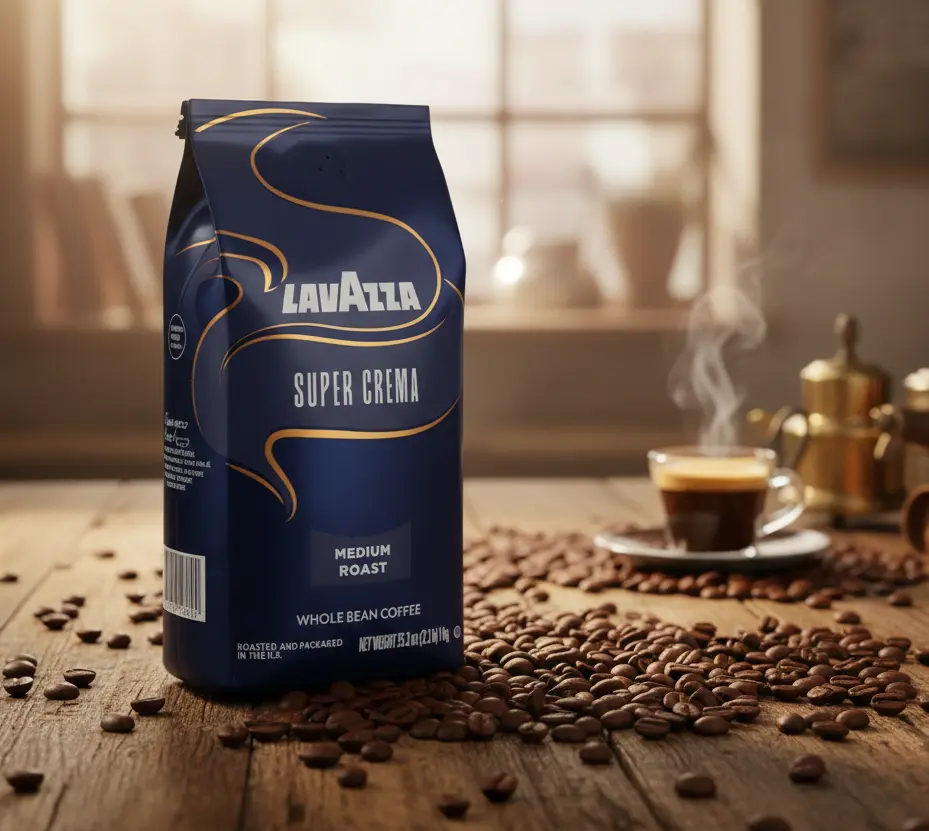
If you have ever stood in the coffee aisle or scrolled through Amazon looking for the perfect espresso bean that balances quality, crema, and price, you have undoubtedly crossed paths with the “Blue Bag”—Lavazza Super Crema.
For over a decade, it has been a best-seller, but does it still hold up in 2026 against the rising tide of specialty third-wave roasters?
The short answer is yes, but with specific caveats depending on your brewing method. Lavazza Super Crema occupies a unique “sweet spot” in the coffee market. It isn’t a single-origin micro-lot from Ethiopia, nor is it a bitter, oily dark roast found in budget diners.
It is the workhorse of the home espresso world—engineered specifically to produce that rich, velvety crema that many automatic and semi-automatic machines struggle to create with other beans.
In this comprehensive 2026 guide, we are stripping away the marketing fluff. We will dive deep into the bean composition, the exact settings you need for your Breville or Gaggia machine, and ultimately help you decide if this Italian classic deserves a permanent spot in your hopper.
What is Lavazza Super Crema?
Lavazza, established in Turin, Italy in 1895, is essentially the royalty of Italian coffee. The Super Crema blend is one of their professional line products that successfully crossed over into the consumer market.
Unlike some of their 100% Arabica blends (like the Qualità Oro), Super Crema was scientifically formulated for one primary purpose: texture.
The name is not an exaggeration. The blend is designed to produce a thick, long-lasting layer of crema on top of your espresso shot. This is achieved through a specific blending strategy that incorporates high-quality washed Robusta beans alongside Arabica varieties.
While “Robusta” was once a dirty word in American coffee culture, Lavazza demonstrates how high-grade Robusta contributes essential body, caffeine, and crema without the “burnt rubber” taste associated with low-quality variants.
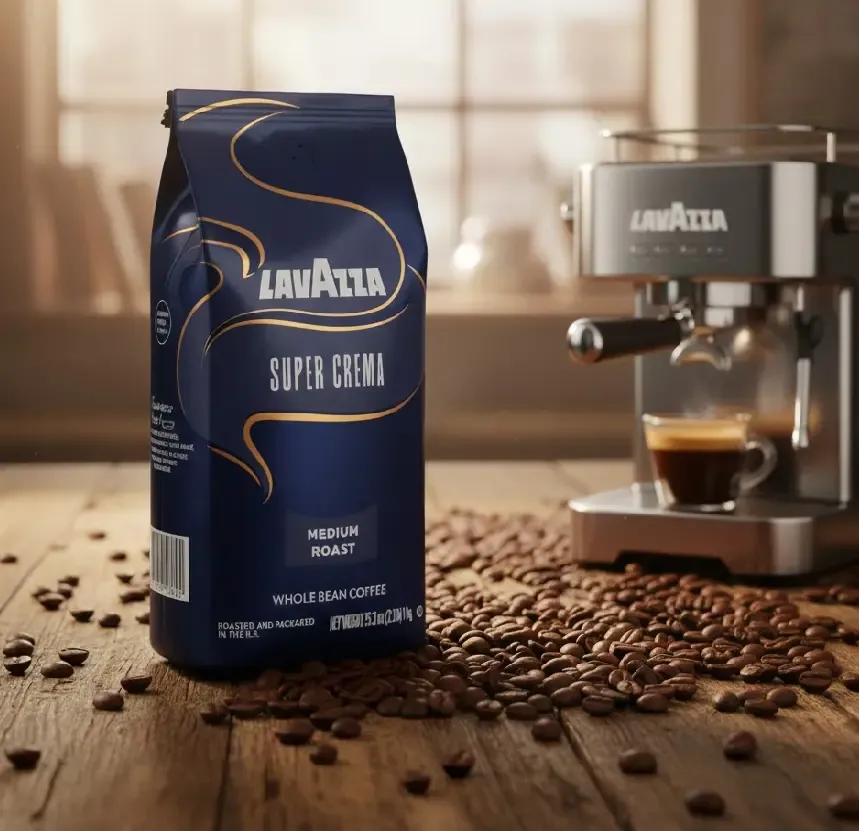
Product Specifications
Understanding the technical details of the bean helps manage expectations regarding flavor and extraction.
{% table %}
- Feature
- Specification Detail
- Blend Composition
- 60% Arabica / 40% Robusta
- Roast Level
- Medium-Dark (Classic Italian Roast)
- Origins
- Natural Arabica from Brazil, Washed Indian Arabica, High-quality Columbian, and Robusta from Indonesia and Vietnam.
- Primary Flavor Notes
- Roasted Hazelnut, Brown Sugar, Honey, Dried Fruit
- Caffeine Content
- Medium-High (due to Robusta content)
- Best For
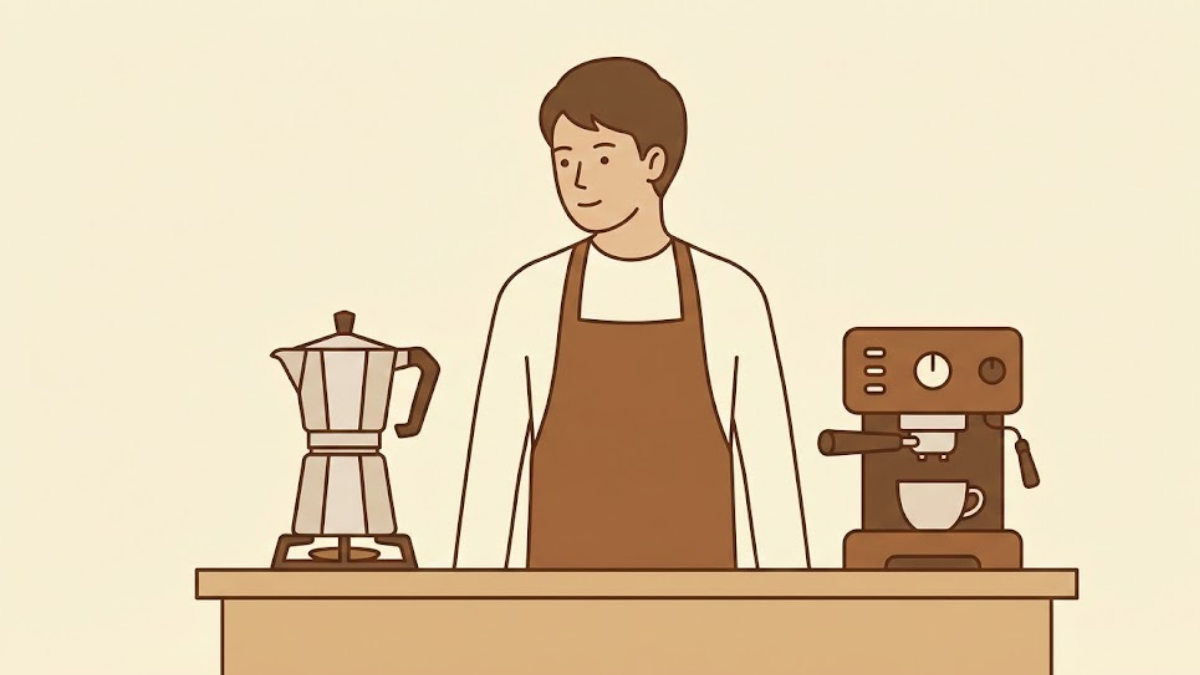
- Espresso, Cappuccino, Latte, Moka Pot
- Packaging
- 2.2 lb (1kg) Bag with one-way air valve {% /table %}
Detailed Flavor Profile & Tasting Notes
When you pull a shot of Super Crema, the first thing you notice is the aroma. It is not floral or fruity like a light roast; it is comforting and “bready.”
The Espresso Shot
Body: The mouthfeel is the star here. It is viscous and heavy, coating the tongue pleasantly. This is the 40% Robusta making its presence known.
Taste: The initial hit is free of sharp acidity. You won’t find the lemon or berry notes common in third-wave coffee. Instead, the palate is dominated by roasted hazelnuts and brown sugar. As the shot cools slightly, you might detect hints of honey and dried apricot, though these are subtle.
Finish: The finish is clean but lasting, leaving a mild cocoa aftertaste. It lacks the bitterness often found in darker French roasts, making it surprisingly drinkable as a straight shot for those who usually find espresso too intense.
Milk Compatibility NoteSuper Crema shines brightest in milk-based drinks. The nutty, chocolatey profile cuts through milk perfectly. In a latte or cappuccino, it tastes like “coffee ice cream”—sweet, creamy, and rich.
Complete Brew Guide
Getting the best out of Super Crema requires treating it differently than a 100% Arabica bean. The Robusta content makes it extract differently—often faster and with more foam.
1. Espresso Machine Settings
Whether you are using a Breville Barista Express, a Gaggia Classic, or a high-end Rocket, these are your baseline targets:
- Temperature: 195°F - 200°F (90°C - 93°C). Do not go too hot (over 203°F) or the Robusta will turn bitter and astringent.
- Dose: 18 grams in a double basket is standard.
- Yield: Aim for a 1:2 ratio. For 18g of coffee, aim for 36g of liquid espresso.
- Time: 25-30 seconds.
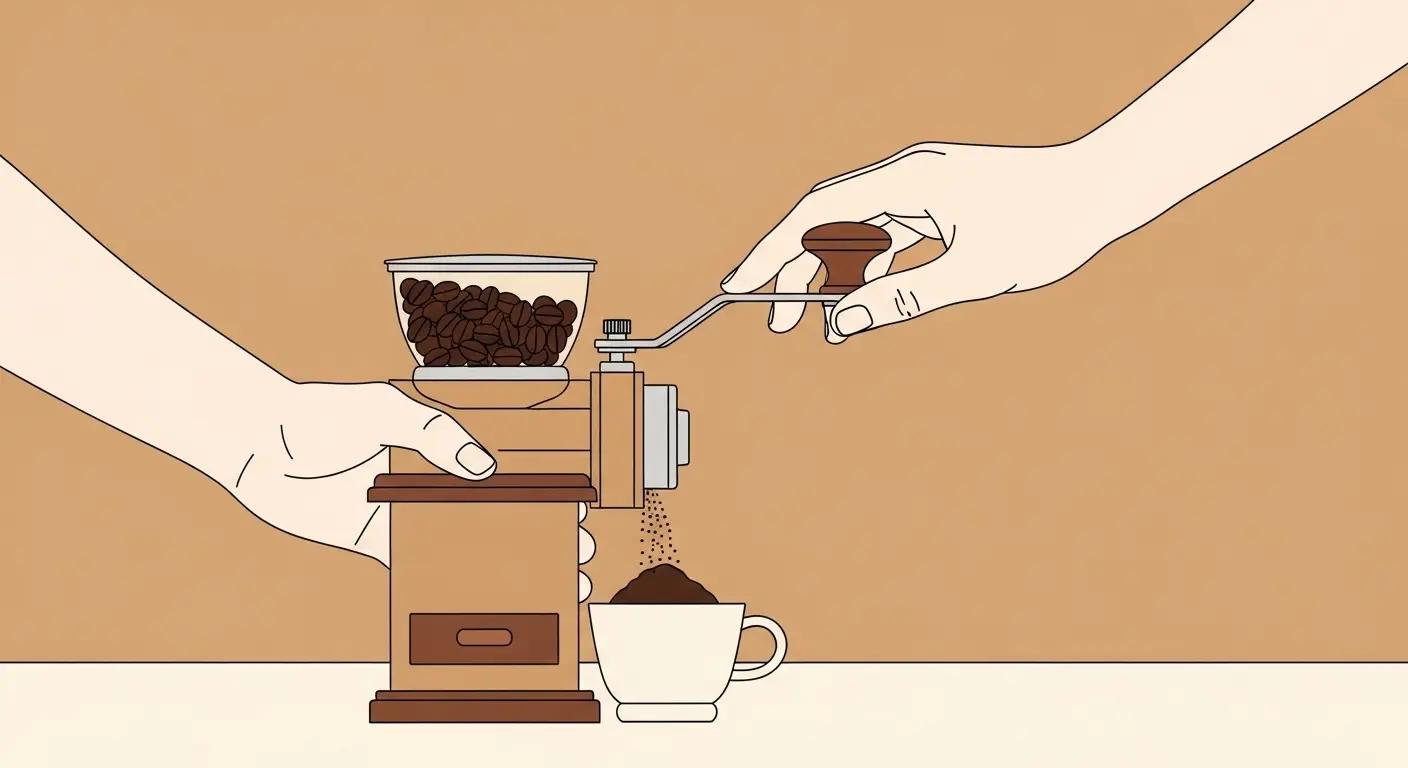
2. Grind Size Recommendations
Super Crema beans are generally less dense than high-altitude light roasts. This means they are easier to grind and generate fewer fines.
- Espresso: Fine, similar to table salt. If your shots are running too fast (under 20 seconds), grind finer. Because these beans produce so much crema, visual volume can be deceiving—always weigh your output.
- Moka Pot: Medium-Fine. Slightly coarser than espresso. This prevents the pot from clogging while maintaining rich pressure.
- French Press: Coarse. However, we do not highly recommend this bean for French Press or Drip, as the lack of acidity can make large cups taste somewhat flat.
3. Storage Tips
The 2.2lb (1kg) bag is large for a single home user. Oxygen is the enemy of flavor.
- Immediate Use: Keep about a week’s worth of beans in an airtight canister (like an Airscape or Fellow Atmos) in a cool, dark cupboard.
- Long-term: Freeze the rest. Portion the remaining beans into vacuum-sealed bags or airtight heavy-duty freezer bags. Defrost them fully to room temperature before opening the bag to prevent condensation.
Pros and Cons: An Honest Assessment
The Good
Incredible Crema:Produces a thick, tiger-striped crema easily, even on entry-level machines.Low Acidity:Gentle on the stomach; no sour notes.Forgiving:You don't need to be a master barista to pull a drinkable shot. Large "sweet spot" for dialing in.Value:Excellent price-to-quality ratio, especially in the 1kg bulk bag.Milk Pairing:Exceptional for lattes and cappuccinos.
The Bad
Not for Purists:If you hate Robusta or prefer fruity/floral notes, skip this.Bag Size:Usually only sold in 1kg bags, which can go stale if you don't drink coffee daily.Date Issues:When buying from large warehouses (like Amazon), always check the "Roast Date." Occasionally, stock can be older.Oily Potential:As the beans age, oils surface which can require more frequent grinder cleaning.
Who Should Buy This Coffee?
Buy Lavazza Super Crema if:
- You own an automatic espresso machine (super-automatic) like a Jura or Philips Lattego. The non-oily surface (when fresh) is safe for built-in grinders.
- You primarily drink milk-based drinks (cappuccinos, lattes, flat whites).
- You dislike sour/acidic coffee notes.
- You want a consistent, “classic coffee shop” taste at home.
Do NOT Buy Lavazza Super Crema if:
- You are a third-wave coffee enthusiast looking for blueberry, jasmine, or citrus notes.
- You exclusively drink pour-over or Chemex coffee (it will taste generic and flat).
- You are strictly against consuming Robusta beans.
Price & Value Analysis
In the US market, specialty coffee roasters often charge $18-$25 for a 12oz (340g) bag. Lavazza Super Crema typically retails for roughly the same price (or slightly less) but for a full 2.2lbs (1kg). This makes it roughly half to one-third the price per shot compared to local specialty roasters.
For a daily drinker, the savings are substantial. While it may not reach the flavor complexity of a $25 single-origin bag, the value proposition is unbeatable for a “daily driver” coffee bean.
Expert Tips for Best Results
- Purge Your Grinder: If you are switching to Super Crema from a 100% Arabica bean, purge a small amount through your grinder first. The adjustment in grind size can be significant.
- Watch the Flow: Because of the crema volume, the flow might look thick and slow like honey. This is good! Don’t panic and coarsen the grind unless it starts dripping instead of flowing.
- The “Sugar Test”: A fun way to test your extraction with these beans is the sugar test. Pour a teaspoon of sugar onto your espresso shot. With Super Crema, the sugar should sit on top of the crema for several seconds before sinking.
Frequently Asked Questions
Is Lavazza Super Crema oily?
Generally, no. It is a medium-dark roast, but usually dry on the surface when fresh. As the beans age (3+ months post-roast), some oil may migrate to the surface. It is generally safe for super-automatic machines.
What is the “Best By” date vs “Roast Date”?
Lavazza typically prints a “Best By” date that is 2 years from the roast date. To find the roast date, subtract 2 years from the date on the bag. For best results, try to consume within 3-4 months of the roast date.
Does Super Crema have more caffeine?
Yes. Robusta beans contain almost double the caffeine of Arabica beans. With a 40% Robusta composition, Super Crema will give you a stronger “kick” than a standard 100% Arabica blend.
Can I use this for Cold Brew?
You can, but it’s not ideal. The nutty/chocolate notes work okay, but cold brew generally benefits from fruitier or more aromatic beans. If you do use it, add milk to the final drink.
Why is my shot sour?
If Super Crema tastes sour, your brewing temperature is likely too low, or your water is flowing through the puck too fast (under-extraction). Grind finer or increase temperature.
Final Verdict & Rating
4.6
★★★★★
Lavazza Super Crema is the undisputed king of mid-range espresso blends.
It accomplishes exactly what it sets out to do: provide a rich, creamy, and consistent espresso experience that rivals local cafes at a fraction of the cost. It bridges the gap between commercial grocery store coffee and high-end specialty roasts. While it lacks the complexity of single-origin beans, its reliability, forgiving nature, and incredible texture make it a staple for home baristas across the USA.