The moment the hot water meets the freshly ground coffee, a silent, complex chemical reaction begins. It is a moment of transformation, a release of hundreds of volatile aromatic compounds that have been locked away since the bean was a cherry on a distant hillside. For the uninitiated, coffee is simply a dark, caffeinated beverage. But for the enthusiast, it is a world of infinite possibility, a liquid cartography of flavor waiting to be explored.
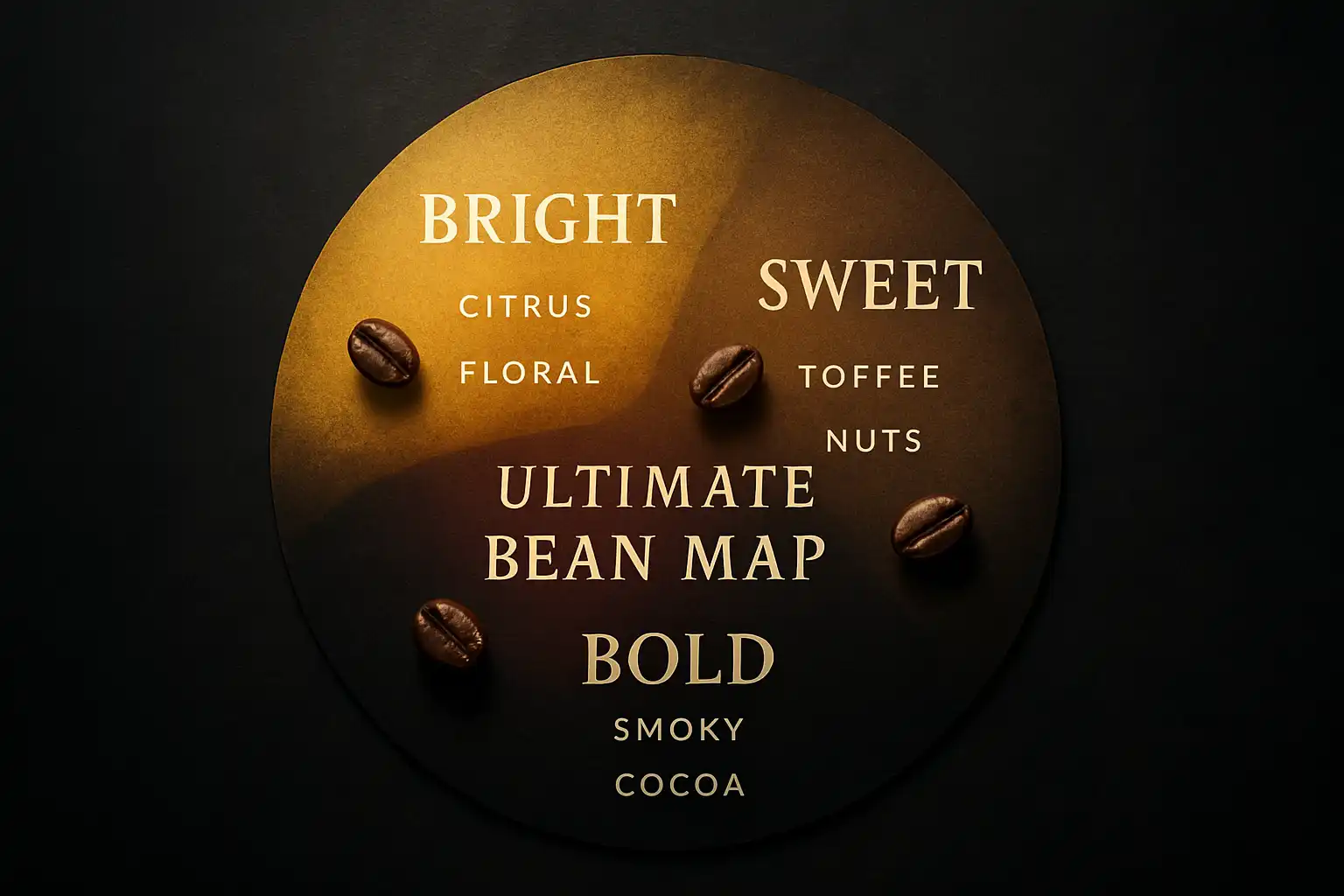
We often talk about coffee in vague terms—“good,” “strong,” or “smooth.” But to truly appreciate the craft, we must move beyond these simple descriptors and understand the foundational flavor architecture that defines every cup. This is the Ultimate Bean Map, a guide built on three pillars: the Bright, the Sweet, and the Bold profiles. Understanding this map is not just about vocabulary; it is about unlocking a deeper, more meaningful relationship with your daily ritual. It is the difference between drinking coffee and experiencing it.
The Cartography of Taste: Mapping the Bean’s Journey
Before the bean reaches the roaster, its flavor destiny is already being written by a confluence of natural and human factors. The final profile in your cup is a direct echo of its origin, its varietal, and the meticulous process it underwent.
The Terroir and the Seed: Where Flavor Begins
The concept of terroir—the complete natural environment in which a particular coffee is produced—is paramount. High-altitude farms, for instance, force the coffee cherry to mature slowly, concentrating its sugars and acids. This slow development is the genesis of complexity.
- Altitude: Higher elevations (1,200m+) lead to denser beans, higher acidity, and more complex, often brighter, flavors.
- Varietal: Different coffee species and cultivars (e.g., Gesha, Bourbon, Typica) possess unique genetic flavor markers. A Gesha, for example, is genetically predisposed to exhibit delicate floral and tea-like notes.
- Climate: Consistent rainfall, temperature, and soil composition (volcanic soil is prized) all contribute to the final flavor profile.
The Hand of the Processor: Washed, Natural, and Honey
The way the coffee cherry is stripped of its fruit (pulp) is arguably the most critical human intervention in shaping the flavor profile.
| Processing Method | Description | Primary Flavor Impact | Profile Association |
|---|---|---|---|
| Washed (Wet) | Fruit pulp is removed before drying. | High clarity, pronounced acidity, clean finish. | Bright |
| Natural (Dry) | Whole cherry is dried with the fruit intact. | Intense fruitiness, heavy body, deep sweetness. | Sweet |
| Honey (Pulped Natural) | Some fruit mucilage is left on the bean during drying. | Balanced sweetness and acidity, syrupy body. | Sweet/Bright Balance |
The Bright Profile: An Ode to Acidity and Clarity
The Bright profile is the hallmark of modern specialty coffee. It is characterized by a vibrant, clean acidity that is often mistaken for sourness by those accustomed to darker roasts. This acidity, however, is the lifeblood of the coffee, providing structure and complexity, much like a fine wine.
Characteristics of a Bright Coffee:
- Acidity: High, clean, and specific (e.g., citric, malic, tartaric).
- Flavor Notes: Citrus (lemon, bergamot), floral (jasmine, rose), tea-like, and delicate.
- Body: Light to medium, often described as silky or elegant.
- Roast Level: Almost exclusively light.
This profile is most often found in high-grown African coffees, particularly those from Ethiopia (the birthplace of coffee) and Kenya. Their washed processing methods ensure the phenolic compounds responsible for these clean, tart flavors are preserved.
“Acidity is not a flaw; it is the tension that gives the coffee its story. Without that bright, clean snap, the flavor collapses into a dull monotone. It is the high note in the symphony of the cup.”
Brewing for Brightness
To accentuate the inherent brightness, you need a brewing method that favors clarity and a slightly faster extraction.
- Grind Size: Medium-fine.
- Brewing Method: Pour-over (V60, Chemex) is ideal for its clean paper filtration.
- Water Temperature: Slightly lower (around 195°F to 205°F) to avoid over-extracting the bitter compounds.
The Sweet Profile: The Unseen Depth of Sugars
The Sweet profile is the most universally appealing, representing the perfect balance between the origin’s inherent sugar content and the roaster’s ability to caramelize it without burning. This profile is not about adding sugar; it is about the natural, deep sweetness developed within the bean itself.
Characteristics of a Sweet Coffee:
- Balance: Low to medium acidity, perfectly integrated with sweetness.
- Flavor Notes: Caramel, toffee, milk chocolate, brown sugar, nuts, and dried fruit.
- Body: Medium to full, often syrupy or creamy.
- Roast Level: Medium to medium-dark.
The sweetness comes from the Maillard reaction and caramelization during the roast. The roaster must carefully manage the heat to convert complex carbohydrates into simple, palatable sugars. Natural-processed coffees from Brazil or high-altitude Central American regions often exemplify this profile, offering a dense, comforting sweetness.
“The true art of roasting is not in the color of the bean, but in the management of heat to unlock the inherent sweetness. We are sugar farmers, not charcoal producers. The sweetness is the soul of the coffee, and the roast is merely the key.”
Achieving Sweetness in the Cup
To maximize sweetness, you want a method that encourages a full, even extraction and retains the coffee’s natural oils.
- Grind Size: Medium.
- Brewing Method: French Press or AeroPress (inverted method) for full immersion and oil retention.
- Water Temperature: Standard (200°F to 205°F) to ensure proper solubility of the caramelized sugars.
The Bold Profile: Weight, Intensity, and Roaster’s Art
The Bold profile is the traditionalist’s cup—the coffee that stands up to milk and sugar, the one that defines “strong.” It is characterized by a heavy, almost chewy body and flavors dominated by the roasting process itself, with the origin characteristics taking a backseat.
Characteristics of a Bold Coffee:
- Intensity: High, with a lingering finish.
- Flavor Notes: Dark chocolate, cocoa, smoky, roasted nuts, and sometimes a hint of spice or earthiness.
- Body: Very full, heavy, and viscous.
- Acidity: Very low, often perceived as bitterness (a desirable bitterness, like that of dark cocoa).
- Roast Level: Medium-dark to dark (reaching or passing the second crack).
In a Bold profile, the roaster has pushed the bean deep into the development phase, creating a high concentration of melanoidins (compounds responsible for the dark color and heavy body). This profile is common in coffees from Indonesia (Sumatra, Java) or classic Italian/French roasts of Central and South American beans.
“Boldness is about presence. It’s the difference between a whisper and a declaration. We roast past the point of origin to create a unified, powerful flavor that speaks to the comfort and ritual of a truly dark cup. It is a profile of deliberate intensity.”
Mastering the Bold Brew
Bold coffees require methods that can handle a finer grind and high pressure to extract their dense flavors.
- Grind Size: Fine (for espresso) or medium-coarse (for drip).
- Brewing Method: Espresso machine or Moka Pot, which use pressure to extract the heavy oils.
- Water Temperature: Standard to slightly higher (205°F) to cut through the density.
The Ultimate Bean Map: A Comparative Guide
To truly master the map, it helps to see the three profiles side-by-side. Your preference is a journey, and you may find yourself moving between these pillars depending on the time of day, the season, or the brewing method you choose.
| Feature | Bright Profile | Sweet Profile | Bold Profile |
|---|---|---|---|
| Primary Sensation | Acidity & Clarity | Balance & Depth | Body & Intensity |
| Typical Origin | Ethiopia, Kenya, Rwanda | Brazil, Colombia, Guatemala | Sumatra, Vietnam, Dark Blends |
| Roast Level | Light | Medium | Dark |
| Key Flavor Compounds | Chlorogenic Acids | Caramelized Sugars (Maillard) | Melanoidins (Pyrolysis) |
| Best Brewing Method | Pour-over (V60, Chemex) | French Press, AeroPress | Espresso, Moka Pot |
| Ideal Time of Day | Morning (to awaken the palate) | Mid-morning/Afternoon | After a meal/Late evening |
Conclusion: Your Next Cup is a Choice
The Ultimate Bean Map is not a rigid set of rules, but a framework for appreciation. When you next approach a bag of specialty coffee, look past the marketing and ask yourself: Is this bean designed to be Bright, showcasing the clarity of its origin? Is it Sweet, promising a comforting, balanced depth? Or is it Bold, offering a powerful, resonant intensity?
By understanding the journey from the high-altitude farm to the roaster’s drum, you transform from a casual consumer into a discerning enthusiast. Every cup becomes a conscious choice, a sophisticated conversation with the global community of coffee practitioners. Go forth, explore the map, and find the profile that speaks most eloquently to your soul.